I remember the first time a video game controller truly vibrated in my hands, not just a clumsy rumble, but a distinct *thump* that felt like a heartbeat, or a *snap* that mimicked the tension of a bowstring. It wasn't just noise; it was a sensation that pulled me deeper into the virtual world. Fast forward to today, and I find myself marveling at how my smartphone can deliver a subtle *click* when I type, a gentle *throb* for a new notification, or a firm *buzz* if I try to scroll past the end of a list. These aren't random shakes; they're precise, intentional touches from an invisible hand, making the digital world feel undeniably real.
This sophisticated art of digital touch is called **haptic feedback**, and it's far more intricate than just a simple vibrating motor. It’s the science of making us *feel* information, translating abstract digital events into tangible physical sensations. So, how exactly does this technology trick our brains into experiencing digital actions as real, physical touch?
The Unseen Language of Touch
At its core, haptic feedback aims to engage our **somatosensory system**, the part of our nervous system responsible for processing sensory input from our skin. When you touch something, pressure receptors, thermoreceptors, and nociceptors in your skin send signals to your brain. Haptics attempts to simulate these natural physical interactions, adding an extra layer of immersion and usability to our devices.
I think about the early days of mobile phones, where a basic vibrating alert was the pinnacle of haptic technology. It was effective for calls, but lacked nuance. Now, modern devices can simulate textures, clicks, and even the feeling of a button pressing down. This evolution isn't just about making things *feel* good; it's about improving interaction. A well-designed haptic cue can confirm an action, warn of an error, or guide a user without needing visual or auditory feedback. It’s a silent, powerful communication channel that, when done right, we barely even notice it’s working its magic.
How the Magic Happens: Actuators at Work
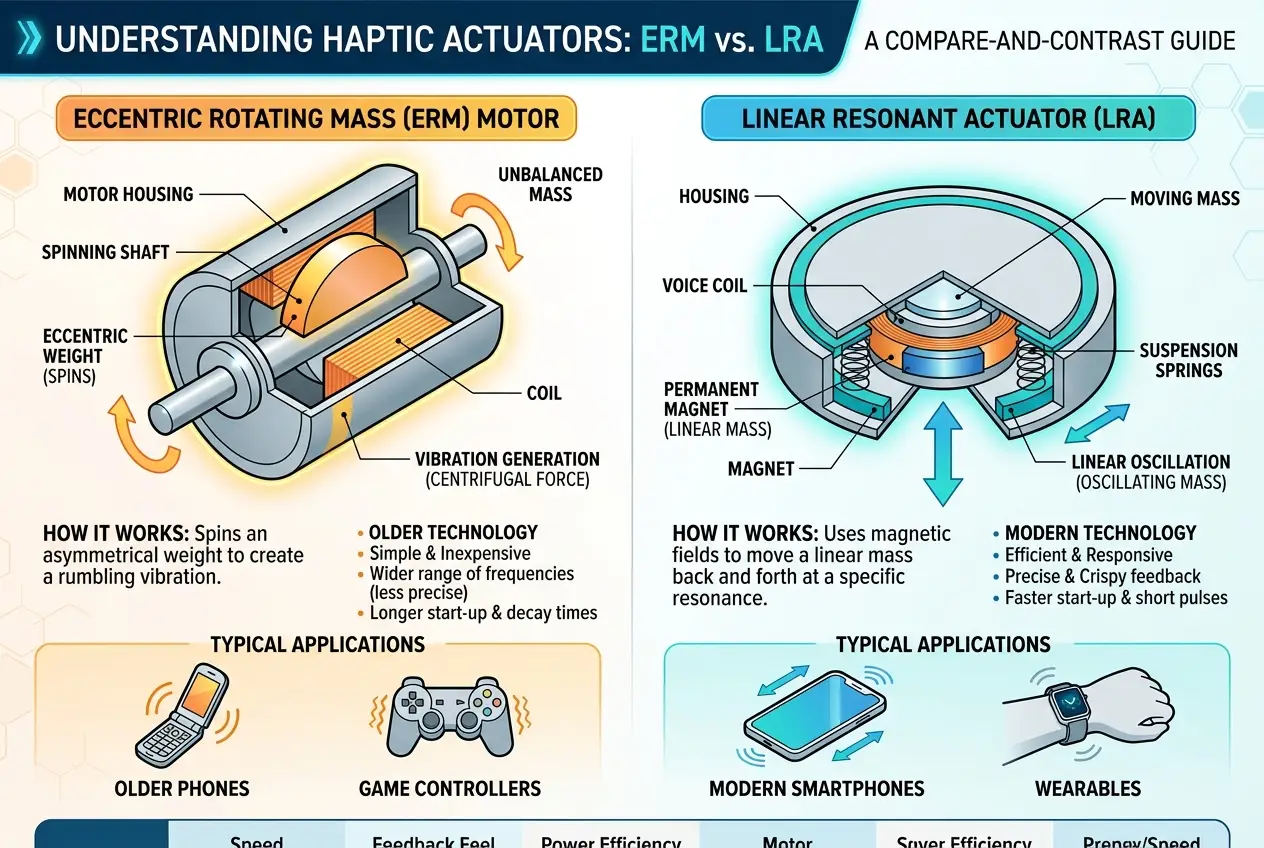
The "muscle" behind haptic feedback is a small electromechanical device called an **actuator**. These tiny components are responsible for converting electrical energy into mechanical motion, creating the vibrations we feel. There are primarily two types of actuators used in consumer electronics today, each with its own characteristics:
Eccentric Rotating Mass (ERM) Motors
ERM motors are the older, more common type, often found in older phones and many game controllers. I bet you’ve felt one of these! They consist of a small DC motor with an unbalanced weight (an "eccentric mass") attached to its shaft. When the motor spins, the unbalanced weight causes the entire motor to vibrate.
* **Pros:** Inexpensive, robust, and capable of strong vibrations.
* **Cons:** Slower to start and stop, less precise in creating varied haptic effects, and often produce a "buzzing" sensation rather than a sharp "click."
Linear Resonant Actuators (LRAs)
LRAs represent a significant leap forward in haptic technology. Instead of a rotating mass, LRAs use a magnetic field to move a mass linearly, back and forth, oscillating at a specific resonant frequency.
* **Pros:** Much faster response times (both start and stop), allowing for crisp, distinct "clicks" and more nuanced haptic patterns. They consume less power and are generally more precise.
* **Cons:** More expensive and typically generate less powerful vibrations compared to ERMs, though their precision often makes up for this.
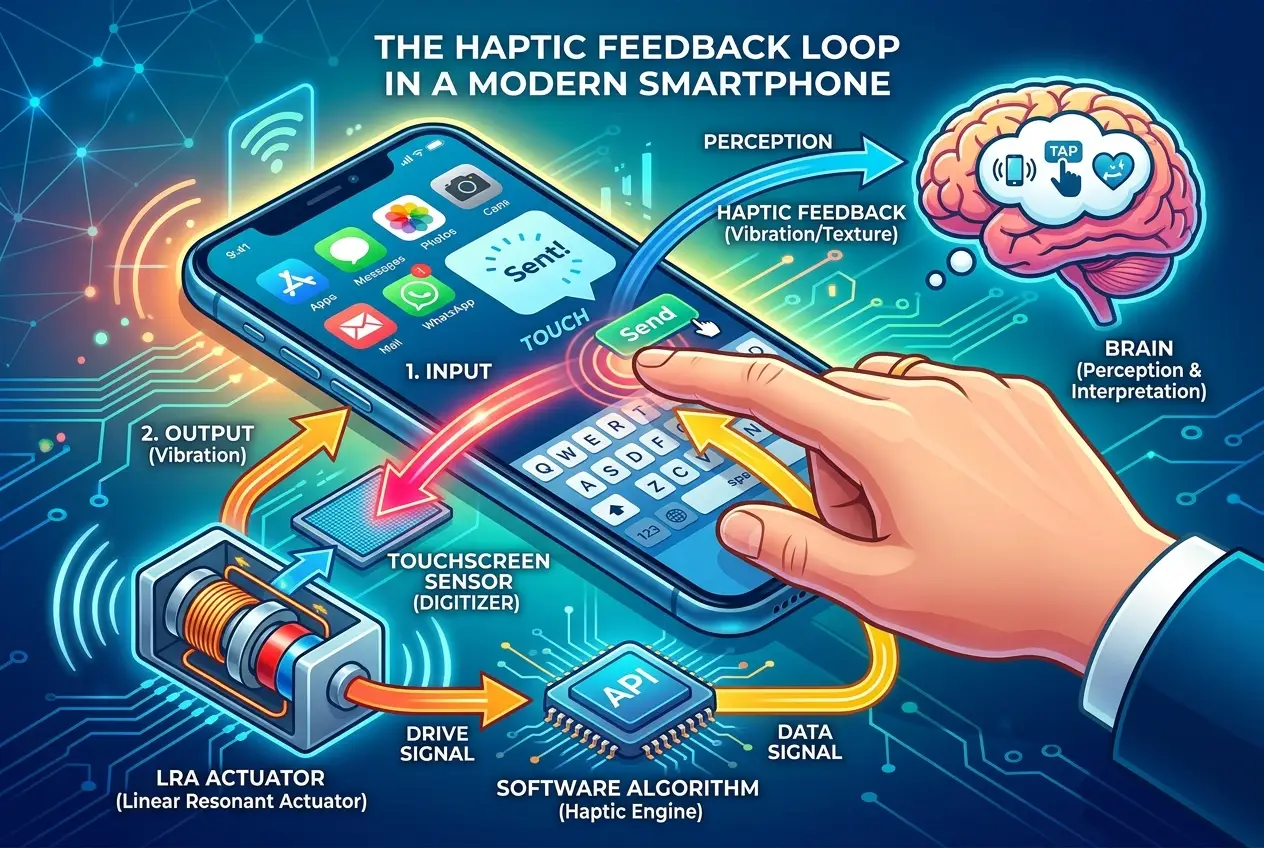
These actuators work in tandem with sophisticated software algorithms that interpret user actions and translate them into specific vibration patterns. Imagine tapping on a virtual keyboard; the software detects the tap, a pre-programmed haptic effect (perhaps a sharp, quick pulse) is sent to the LRA, which then vibrates for milliseconds, giving your finger the sensation of pressing a physical key. This process is so fast that our brains perceive it as instantaneous, a testament to the seamless integration of hardware and software. You can learn more about how actuators work on [Wikipedia's Haptic Technology page](https://en.wikipedia.org/wiki/Haptic_technology).
The Brain's Role: Turning Vibrations into *Feelings*
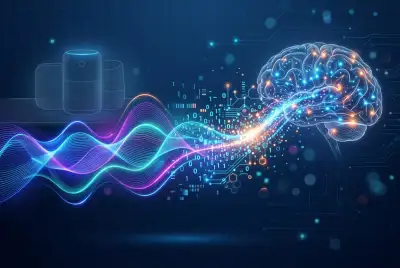
The real magic of haptics isn't just in the vibration; it's in how our **brain interprets** those vibrations. Our tactile sensory system is incredibly complex. When an LRA in your iPhone delivers a short, crisp vibration, your brain doesn't just register a buzz. It correlates that specific pattern with an action you've just performed, like unlocking the phone or successfully sending a message. This mental association is key to why haptic feedback feels so intuitive.
Think about how virtual reality tricks your brain into seeing and hearing a new reality, a topic we touched upon in our blog about how virtual reality can deceive your senses [/blogs/how-does-vr-trick-your-brain-unpacking-realitys-illusion-3236]. Haptics does the same for touch. It creates a subtle, convincing illusion. When a gaming controller rumbles with varying intensity to mimic the feeling of driving over different terrains, your brain actively fills in the gaps, making you *believe* you’re feeling the road, not just a vibrating plastic shell. This cognitive integration is what truly elevates haptics from simple notification alerts to a powerful tool for immersion and interaction.
Haptics in Everyday Life: More Than Just Your Phone
While smartphones and gaming controllers are prime examples, haptic feedback is becoming increasingly prevalent in various other aspects of our daily tech.
* **Wearables:** Smartwatches use haptics for discreet notifications, guiding users with subtle taps rather than intrusive sounds.
* **Automotive:** Car dashboards are incorporating haptic feedback to provide tactile confirmation for button presses, helping drivers keep their eyes on the road. Imagine a "click" when you adjust the volume without looking!
* **Medical Devices:** Surgeons use haptic feedback in robotic surgery systems to "feel" the tissues they are manipulating, enhancing precision and safety. You can find more details about haptics in medical applications on [Wikipedia's page on Haptics](https://en.wikipedia.org/wiki/Haptics).
* **Accessibility:** Haptics can provide non-visual feedback for people with visual impairments, translating on-screen information into patterns they can feel.
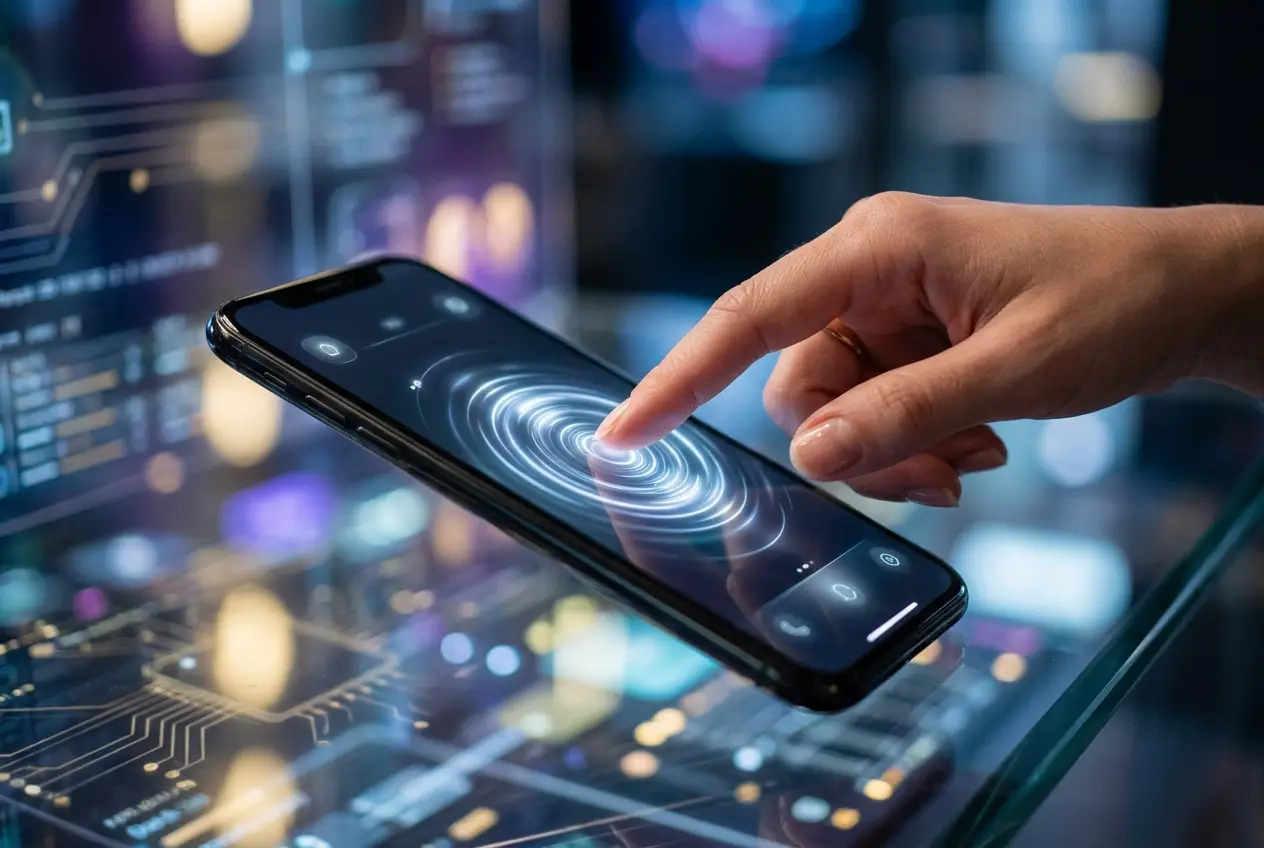
The future of haptics is even more exciting. Researchers are exploring **surface haptics**, which aims to create sensations directly on a smooth glass surface, making it feel like you're touching different textures, buttons, or even shapes. Imagine running your finger over a flat screen and feeling the rough texture of a virtual fabric or the ridge of a virtual button. This advanced haptic technology could revolutionize how we interact with tablets, public kiosks, and even smart windows.
Why Quality Haptics Matter: The Real-Life Connection
I've learned that not all haptic feedback is created equal. A cheap, generic vibration can actually detract from the user experience, making a device feel less premium or even annoying. This is why you might notice a distinct difference between the haptics on a high-end smartphone versus a budget model. Good haptics lead to:
* **Better User Experience:** Crisp, responsive feedback confirms actions, making interfaces feel more intuitive and reliable. It’s similar to how a responsive touchscreen makes interacting with your phone seamless, a concept we covered in our article on how touchscreens interpret your gestures [/blogs/how-do-touchscreens-really-sense-your-finger-3082].
* **Increased Immersion:** In gaming or VR, precise haptics can deepen engagement, making virtual worlds feel more tangible and believable.
* **Reduced Cognitive Load:** Users can perform tasks more efficiently, often without needing to look at the screen, as the tactile feedback provides clear cues.
* **Product Perception:** High-quality haptic feedback often correlates with a sense of quality and craftsmanship in a device, influencing a user's overall impression.
Poor haptics, on the other hand, can feel jarring, imprecise, and simply like a cheap "buzz." This is why cheap earbuds might have a less satisfying click compared to premium ones, or why some game controllers feel more "rumble-heavy" than others. The choice of actuator and the sophistication of the software algorithm make all the difference. Understanding this difference can help you appreciate the subtle engineering that goes into making our digital interactions feel so natural.
The Future is Felt
The journey of haptic feedback, from a simple pager-style buzz to nuanced, directional sensations, highlights humanity's continuous quest to bridge the gap between the digital and physical worlds. As technology advances, I anticipate haptics will become even more sophisticated, allowing us to not just *feel* a vibration, but to truly *sense* textures, temperatures, and even shapes in the virtual realm. This invisible language of touch is constantly evolving, promising a future where our digital experiences are as rich and tangible as our physical ones. The next time your phone gives you a gentle buzz, take a moment to appreciate the complex interplay of engineering and human perception at work.
Frequently Asked Questions
ERM motors use an unbalanced rotating mass for vibrations, making them less precise and slower to respond, often creating a 'buzz.' LRAs use a magnetic field to move a mass linearly, offering faster, crisper, and more nuanced haptic effects like distinct 'clicks'.
Haptic feedback enhances user experience by providing tactile confirmation for actions (e.g., typing, button presses), reducing the need for visual or auditory cues, and increasing immersion in applications like gaming and VR, making interactions feel more intuitive and natural.
Yes, advanced haptic systems and ongoing research are exploring ways to simulate various sensations, including textures, temperatures, and even the feeling of shapes on a flat surface, moving beyond basic vibrations to create a richer tactile experience.
The brain's ability to interpret specific vibration patterns and correlate them with performed actions is crucial. It turns raw physical vibrations into meaningful 'feelings' or confirmations, creating a cognitive association that makes the digital interaction feel real and intuitive, rather than just a random shake.
Beyond current applications, haptic technology is expected to expand into areas like advanced virtual reality (allowing users to 'feel' virtual objects), improved accessibility tools, more intuitive automotive interfaces, and possibly even remote interaction systems where tactile sensations can be transmitted over distances.
Verified Expert
Alex Rivers
A professional researcher since age twelve, I delve into mysteries and ignite curiosity by presenting an array of compelling possibilities. I will heighten your curiosity, but by the end, you will possess profound knowledge.
Leave a Reply
Comments (0)
No approved comments yet. Be the first to share your thoughts!
 Join Us



 Unknown Author

































Leave a Reply
Comments (0)